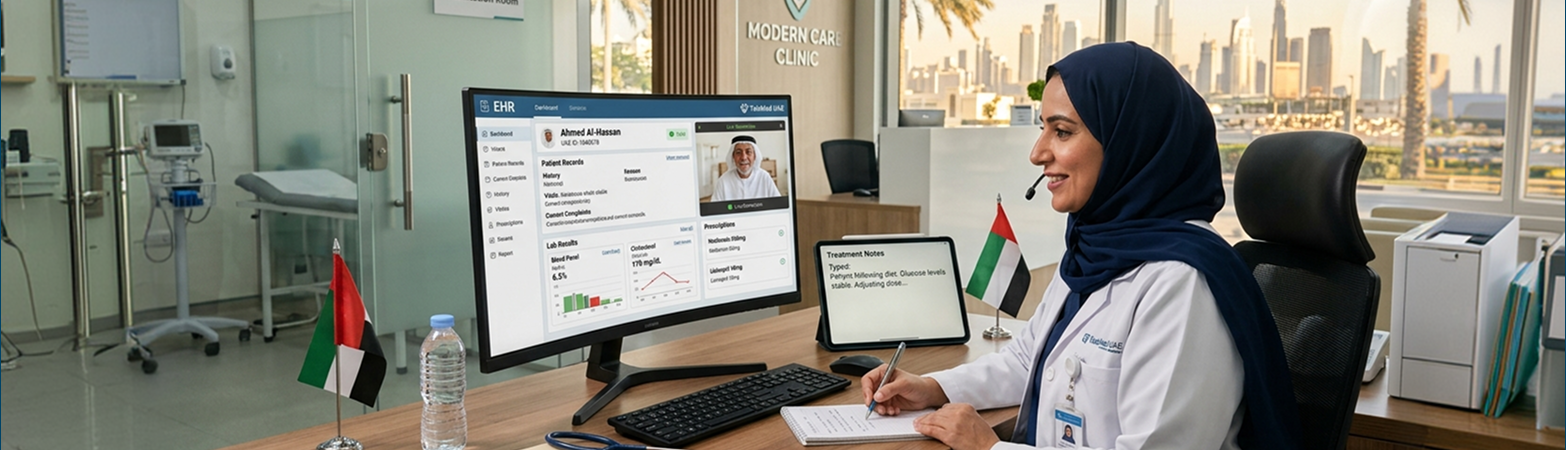
Top Features UAE Clinics Need in Modern EHR Systems
The healthcare industry in the UAE is rapidly evolving with the help of digital technologies and smart healthcare solutions. Clinics are increasingly moving away from traditional paper-based systems and adopting Electronic Health Record (EHR) systems to improve patient care, streamline operations, and manage healthcare information more efficiently.
Modern EHR systems are designed to help clinics store, organise, and access patient data digitally. However, not all EHR systems offer the same level of functionality. UAE clinics need modern solutions that support secure data management, smooth communication, and efficient healthcare workflows.
Choosing the right EHR system can help clinics improve productivity, reduce administrative workload, and deliver better healthcare experiences for patients. In this blog, we will explore some of the top features UAE clinics need in modern EHR systems.
Understanding the Importance of Modern EHR Systems in UAE Clinics
Modern EHR systems have become an essential part of healthcare management because they help clinics handle patient information more effectively. Instead of maintaining paper records, clinics can store patient histories, prescriptions, diagnostic reports, and treatment details digitally in one secure platform.
Digital healthcare systems improve accessibility and reduce the time required to search for patient information. Doctors and healthcare staff can quickly review records, update treatment plans, and manage appointments more efficiently.
For UAE clinics, modern EHR systems also support better communication between departments and healthcare providers. This helps improve coordination, reduce delays, and create smoother healthcare operations.
As healthcare services continue becoming more digital, clinics require advanced EHR systems that can support both operational efficiency and high-quality patient care.
Why Digital Patient Record Management Matters in Healthcare
Patient record management plays an important role in healthcare quality and decision-making. Inaccurate or incomplete records can affect diagnosis, treatment planning, and patient safety.
Digital patient record management helps clinics maintain organised and updated healthcare information in real time. Modern EHR systems allow healthcare providers to access complete patient histories quickly, including medications, allergies, previous treatments, and lab results.
This reduces the risk of manual errors and improves treatment accuracy. It also helps clinics minimise duplicate records and unnecessary paperwork, creating a more efficient workflow for healthcare staff.
For patients, digital record management improves the overall healthcare experience by allowing faster appointments, smoother follow-ups, and more personalised treatment plans.
Real-Time Access to Patient Information for Better Care
One of the most valuable features of modern EHR systems is real-time access to patient information. In busy healthcare environments, doctors and medical staff need immediate access to updated records to make fast and informed decisions.
Modern EHR platforms allow healthcare providers to view patient data instantly from connected systems. Whether it is diagnostic reports, prescriptions, appointment details, or treatment updates, information can be accessed securely in real time.
This improves communication between healthcare teams and helps clinics respond faster during emergencies or urgent medical situations. Real-time access also supports better patient monitoring and reduces delays caused by manual record handling.
By improving data accessibility, clinics can deliver more efficient and patient-focused healthcare services.
How Appointment and Scheduling Features Improve Clinic Efficiency
Managing appointments manually can become time-consuming and may lead to scheduling conflicts, missed appointments, or communication errors. Modern EHR systems include appointment and scheduling features that help clinics organise patient visits more effectively.
Automated scheduling systems allow clinics to manage bookings, send reminders, and reduce waiting times for patients. Patients can also receive appointment notifications and updates more easily, improving communication between clinics and patients.
Efficient scheduling features help healthcare providers manage daily operations more smoothly and reduce administrative workload for clinic staff. This allows medical professionals to focus more on patient care rather than manual scheduling tasks.
Improved appointment management also creates a more organised and convenient experience for patients visiting UAE clinics.
The Role of Secure Data Storage in Modern EHR Systems
Healthcare data contains highly sensitive patient information, making data security one of the most important features of any EHR system. Clinics must ensure that patient records remain protected from unauthorised access, cyber threats, and data breaches.
Modern EHR systems use advanced security measures such as encrypted data storage, secure user authentication, and controlled access permissions to protect healthcare information. These systems also support compliance with healthcare regulations and data privacy standards.
Secure data storage not only protects patient information but also helps clinics build trust with patients and healthcare partners. Reliable security systems ensure that patient data remains accurate, confidential, and accessible only to authorised healthcare professionals.
As cyber risks continue growing in the healthcare industry, strong data security features are becoming essential for all modern EHR systems used in UAE clinics.
Why UAE Clinics Need Easy Integration With Other Healthcare Platforms
Modern healthcare systems depend on multiple digital platforms working together smoothly. Clinics often use separate systems for laboratory management, billing, pharmacy services, appointment scheduling, telemedicine, and patient communication.
An EHR system with strong integration capabilities allows these platforms to exchange information securely and efficiently. Integrated systems help healthcare providers access complete patient information from one central location without switching between multiple applications.
This improves communication between departments and reduces delays caused by disconnected systems. For example, lab results can automatically update patient records, while prescriptions can connect directly with pharmacy systems.
Easy integration also supports better coordination between clinics, hospitals, insurance providers, and diagnostic centres, helping healthcare providers deliver faster and more accurate patient care.
Benefits of Automated Billing and Administrative Features
Administrative tasks can consume a large amount of time in healthcare clinics. Managing appointments, patient registration, billing, insurance claims, and payment processing manually often increases workload and creates opportunities for errors.
Modern EHR systems with automated billing and administrative features help clinics improve operational efficiency by reducing repetitive manual tasks. Automated systems can generate invoices, process insurance claims, manage patient payments, and send appointment reminders without requiring constant staff involvement.
Automation also improves accuracy by reducing data entry mistakes and helping clinics maintain organised financial records. This allows healthcare staff to spend more time focusing on patient care instead of administrative work.
For patients, automated systems create a smoother healthcare experience by improving communication, reducing waiting times, and simplifying appointment management processes.
How Cloud-Based EHR Systems Support Flexible Healthcare Operations
Cloud-based EHR systems are becoming increasingly popular among UAE clinics because they offer greater flexibility and accessibility. Unlike traditional systems that rely on local servers, cloud-based platforms allow healthcare providers to access patient information securely from multiple locations and devices.
This flexibility is especially important for clinics that operate across multiple branches or provide remote healthcare services such as telemedicine consultations. Doctors and healthcare staff can access updated patient records in real time, improving communication and treatment coordination.
Cloud-based systems also support automatic data backups, software updates, and system maintenance, reducing the need for complex on-site infrastructure. This helps clinics lower operational costs while improving system reliability and scalability.
As digital healthcare services continue to grow in the UAE, cloud-based EHR systems are becoming an important part of modern healthcare management.
The Importance of User-Friendly EHR Interfaces for Medical Staff
Healthcare professionals work in fast-paced environments where quick access to information is essential. Complex or difficult-to-use software systems can slow down workflows, increase frustration, and affect productivity.
A user-friendly EHR interface helps doctors, nurses, and administrative staff navigate the system more efficiently. Simple dashboards, organised patient records, and easy data entry processes improve workflow management and reduce training time for healthcare teams.
User-friendly systems also help reduce errors caused by confusing navigation or complicated processes. Healthcare professionals can focus more on patient care instead of struggling with technical issues or inefficient software layouts.
For clinics, investing in easy-to-use EHR systems improves staff productivity and supports smoother day-to-day operations across healthcare departments.
Future Trends in EHR Technology for UAE Healthcare Clinics
The future of EHR technology in the UAE will continue focusing on smarter, more connected, and patient-centred healthcare solutions. Modern EHR systems are expected to integrate more advanced technologies such as Artificial Intelligence, predictive analytics, remote patient monitoring, and telemedicine support.
AI-powered EHR systems may help healthcare providers analyse patient data more effectively, identify health risks earlier, and support faster clinical decision-making. Integrated healthcare platforms will also improve interoperability between hospitals, clinics, laboratories, and pharmacies.
Patient engagement features are likely to become more advanced as well. Future EHR systems may include mobile access, patient portals, automated health reminders, and personalised healthcare management tools.
As healthcare organisations continue investing in digital transformation, clinics that adopt flexible and future-ready EHR systems will be better prepared to meet changing healthcare demands and patient expectations.
Conclusion
Modern EHR systems are helping UAE clinics improve healthcare management, increase operational efficiency, and deliver better patient experiences. Features such as digital patient record management, real-time data access, appointment scheduling, and secure data storage are becoming essential for clinics looking to provide efficient and connected healthcare services.
As healthcare technology continues evolving, clinics will increasingly require flexible and secure EHR solutions that can support future growth and digital transformation. Investing in modern EHR systems can help healthcare providers improve communication, reduce administrative challenges, and strengthen patient care quality.
Businesses looking to build advanced healthcare technology solutions can explore professional healthcare software development services at smartData