How EHR Integration Improves Patient Care in UAE Hospitals
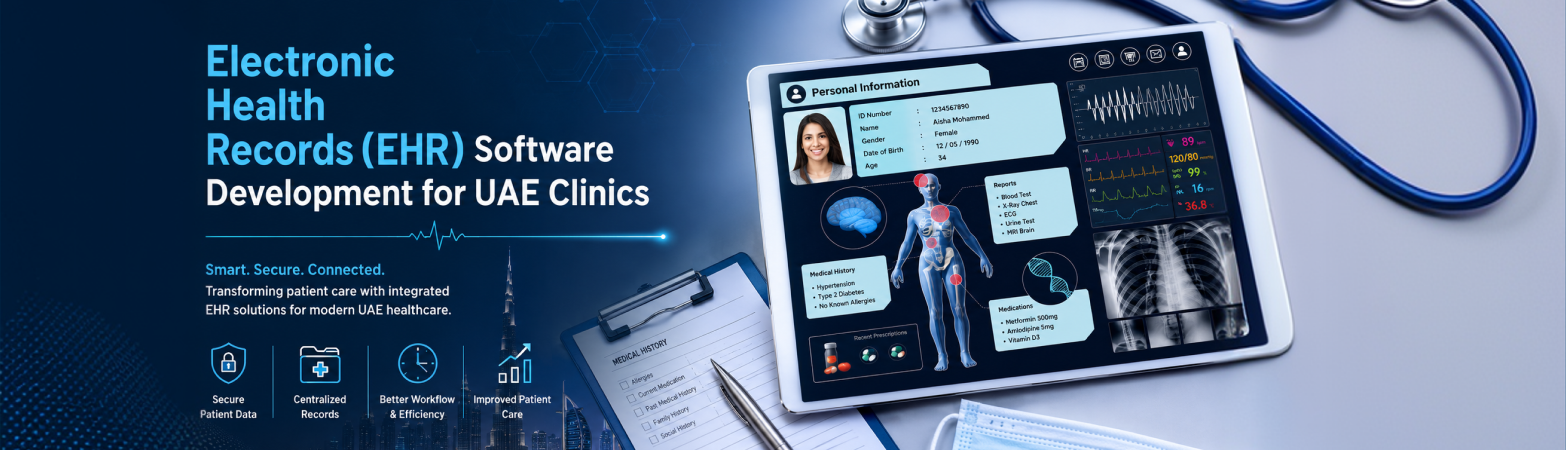
The healthcare industry in the UAE is rapidly embracing digital transformation to improve patient care, streamline hospital operations, and enhance communication between healthcare providers. One of the most important technologies supporting this change is Electronic Health Record (EHR) integration.
EHR systems allow hospitals and clinics to store patient information digitally, including medical history, prescriptions, lab reports, treatment plans, and diagnostic records. When these systems are properly integrated, healthcare providers can access and share patient information more efficiently across different departments and healthcare facilities.
EHR integration plays an important role in improving healthcare quality, reducing delays, and helping doctors make better medical decisions. In this blog, we will explore how EHR integration improves patient care in UAE hospitals and why it is becoming an essential part of modern healthcare systems.
Understanding EHR Integration in Modern Healthcare
EHR integration refers to the process of connecting electronic health record systems with other healthcare platforms and applications. This allows hospitals, clinics, laboratories, pharmacies, and healthcare professionals to exchange patient information securely and in real time.
Modern healthcare systems depend on accurate and connected data to support patient care. Without integration, healthcare providers may need to access multiple systems separately, which can slow down communication and increase the risk of missing important information.
Integrated EHR systems help create a connected healthcare environment where patient records can be accessed quickly and updated automatically. This improves efficiency and ensures that healthcare professionals have access to the latest patient information when making treatment decisions.
Why UAE Hospitals Are Adopting Digital Healthcare Systems
Hospitals across the UAE are investing heavily in digital healthcare technologies to improve operational efficiency and patient experiences. Growing patient demands, advanced medical technologies, and the need for faster healthcare services are encouraging healthcare providers to modernise their systems.
Digital healthcare systems help hospitals reduce paperwork, improve communication, and streamline administrative processes. EHR integration supports these goals by allowing healthcare providers to manage patient information more effectively.
The UAE healthcare sector is also focusing on smart healthcare initiatives and connected healthcare services. Integrated EHR systems help hospitals support telemedicine, remote monitoring, online appointment management, and digital patient communication.
By adopting digital healthcare systems, UAE hospitals are improving service quality and preparing for the future of connected healthcare.
How EHR Integration Helps Doctors Access Patient Data Faster
Quick access to patient information is critical in healthcare environments where timely decisions can directly affect patient outcomes. Doctors often need immediate access to medical history, diagnostic reports, allergies, prescriptions, and treatment records to provide effective care.
EHR integration allows healthcare professionals to view complete patient records from a single connected platform. Instead of searching through multiple systems or paper files, doctors can access updated information instantly.
This improves efficiency during consultations, emergency care, and treatment planning. Faster access to accurate information also helps reduce delays and supports better communication between healthcare teams.
For patients, this means quicker diagnoses, more accurate treatment plans, and a smoother healthcare experience overall.
Improving Communication Between Healthcare Departments Through EHR Systems
Hospitals consist of multiple departments that need to work together efficiently to provide high-quality patient care. Laboratories, pharmacies, radiology departments, emergency units, and specialist teams all rely on accurate communication and data sharing.
EHR integration improves communication by allowing departments to exchange information in real time. When patient records are updated in one department, the information becomes immediately available to authorised healthcare professionals across the hospital.
For example, laboratory test results can automatically appear in a doctor’s system once they are completed. Prescriptions can also be shared directly with pharmacy systems, reducing delays and minimising manual errors.
Improved communication between departments helps healthcare teams coordinate more effectively and deliver faster, safer patient care.
The Role of EHR Integration in Reducing Medical Errors
Medical errors can occur when healthcare providers work with incomplete, outdated, or inaccurate patient information. Manual data entry, disconnected systems, and communication gaps can increase the risk of mistakes in diagnosis, prescriptions, or treatment plans.
EHR integration helps reduce these risks by ensuring that healthcare professionals always have access to updated patient records. Automated data sharing reduces the need for repeated manual entry and improves information accuracy across systems.
Integrated systems can also provide alerts for medication conflicts, allergies, or missing patient information, helping healthcare providers make safer decisions.
By improving data accuracy and communication, EHR integration supports better patient safety and helps hospitals reduce preventable medical errors.
How Integrated EHR Systems Support Better Treatment Decisions
Healthcare professionals depend on accurate and updated patient information to make effective treatment decisions. Without integrated systems, doctors may need to collect information from multiple departments or rely on incomplete records, which can delay patient care.
Integrated EHR systems allow healthcare providers to access complete patient information from one central platform. Doctors can quickly review medical history, lab reports, prescriptions, allergies, and previous treatments in real time.
This improves clinical decision-making because healthcare professionals have a clearer understanding of the patient’s condition. Faster access to accurate information also helps reduce delays during emergencies and supports more efficient treatment planning.
By improving visibility and communication across healthcare departments, integrated EHR systems help hospitals deliver safer and more personalised patient care.
Benefits of Real-Time Patient Information in UAE Hospitals
Real-time access to patient information is one of the biggest advantages of EHR integration. In busy hospital environments, delays in updating or sharing patient records can affect diagnosis, treatment, and overall healthcare efficiency.
Integrated EHR systems ensure that patient data is updated instantly across connected departments and healthcare platforms. When new information such as lab results, prescriptions, or treatment updates is added, authorised healthcare providers can access it immediately.
This improves communication between doctors, nurses, laboratories, pharmacies, and administrative teams. It also helps reduce duplicate tests, unnecessary paperwork, and delays caused by manual record management.
For patients, real-time information sharing creates a smoother healthcare experience by improving appointment management, reducing waiting times, and ensuring more coordinated care throughout the treatment process.
Challenges Hospitals Face Without Proper EHR Integration
Hospitals that use disconnected or outdated healthcare systems often face operational challenges that can affect patient care quality. Without proper EHR integration, healthcare providers may struggle with incomplete records, communication gaps, and delayed access to important patient information.
Manual data entry and paper-based systems can also increase the risk of human errors, duplicate records, and inconsistent information between departments. These issues can slow down healthcare processes and create confusion during patient treatment.
Another challenge is limited collaboration between healthcare teams. If systems are not connected properly, departments may have difficulty sharing information quickly and accurately. This can affect coordination between doctors, specialists, laboratories, and pharmacies.
Proper EHR integration helps solve these issues by creating connected healthcare environments where information flows more efficiently and securely across the hospital system.
How EHR Integration Improves Healthcare Efficiency and Patient Experience
EHR integration not only improves patient care but also helps hospitals operate more efficiently. Automated data sharing reduces administrative workload and allows healthcare staff to focus more on patient treatment instead of manual paperwork.
Integrated systems support faster appointment scheduling, digital prescriptions, billing management, and communication between healthcare departments. This helps reduce delays and improves overall hospital productivity.
For patients, EHR integration creates a more convenient and organised healthcare experience. Patients can receive quicker diagnoses, better follow-up care, and more accurate treatment recommendations because healthcare providers have access to complete and updated information.
Improved efficiency also supports better patient satisfaction by reducing waiting times and improving communication throughout the healthcare journey.
Future of Connected Healthcare Systems in the UAE
The UAE continues investing heavily in smart healthcare technologies and digital transformation initiatives. Connected healthcare systems powered by EHR integration are expected to become even more important in the future of UAE healthcare.
Technologies such as Artificial Intelligence, telemedicine, remote patient monitoring, and cloud-based healthcare platforms depend on integrated healthcare systems to function effectively. EHR integration helps these technologies exchange information securely and efficiently.
Future healthcare systems are likely to focus more on interoperability, allowing hospitals, clinics, laboratories, pharmacies, and healthcare providers to share patient data seamlessly across multiple platforms. This can improve healthcare accessibility, support personalised treatment plans, and strengthen patient care quality. As healthcare technology continues to evolve, EHR integration will remain a critical part of building efficient, connected, and future-ready healthcare systems in the UAE.
Conclusion
EHR integration is becoming an essential part of modern healthcare systems in the UAE. It helps hospitals improve communication, streamline operations, reduce medical errors, and provide faster access to patient information. These improvements directly support better patient care and more efficient healthcare services.
As UAE hospitals continue investing in digital healthcare transformation, integrated EHR systems will play a major role in building connected, secure, and patient-focused healthcare environments. Healthcare providers that adopt advanced EHR integration solutions can improve both operational performance and patient experiences.
Businesses looking to develop advanced healthcare technology solutions can explore professional healthcare software development services at smartData UAE