How AI Is Personalizing Mental Wellness Apps for UAE Users
The way people look after their mental health is changing. Across the UAE, more people are turning to apps on their phones for help with stress, anxiety, sleep, and emotional wellbeing. And behind many of these apps, artificial intelligence is quietly doing a lot of the heavy lifting — learning about each user and making the experience feel less like a generic tool and more like something built just for them.
This shift is a big deal. Mental wellness apps used to offer the same content to everyone. Now, thanks to AI, they can understand how a person is feeling, spot patterns in their behaviour, and adjust what they offer in real time. That makes support feel more relevant, more timely, and more useful.
Why AI Fits So Well With Mental Wellness
The UAE has embraced digital healthcare faster than most places in the world. Smartphones are everywhere, awareness of mental health is growing, and people increasingly want support that fits into their daily lives rather than requiring a clinic visit.
AI is a natural fit for this environment. It can look at how someone uses an app, pick up on patterns, and change what it recommends without any manual input. It also means support is available around the clock — not just during office hours — which matters a lot when someone is struggling at two in the morning and just needs something to help them calm down.
Personal Support, Not Generic Advice
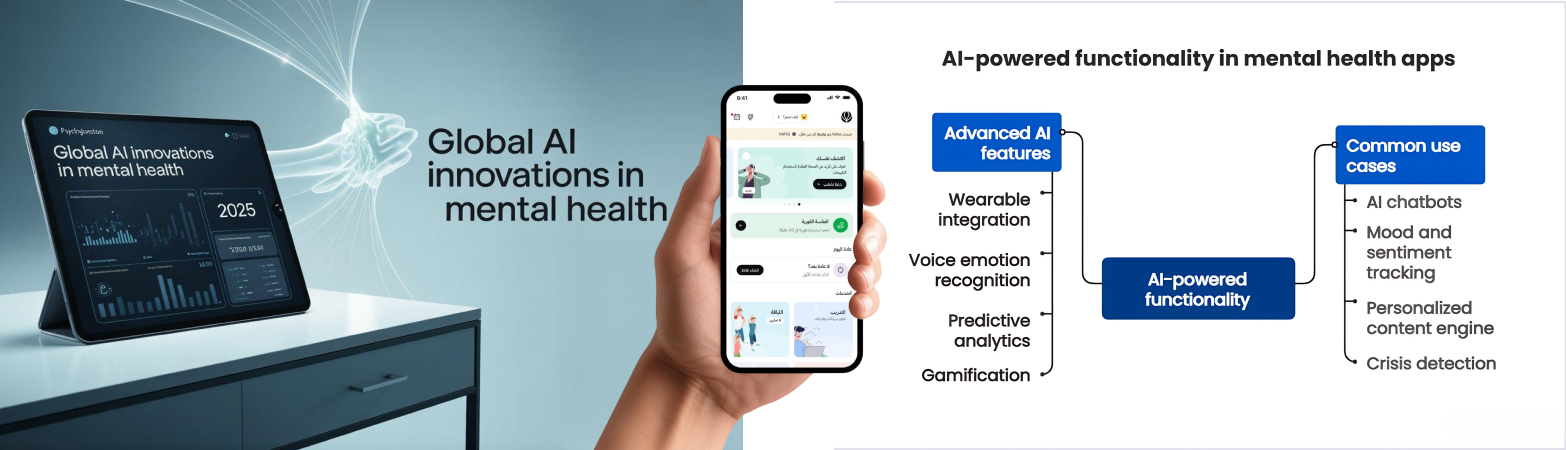
The biggest thing AI brings to mental wellness is personalisation. Instead of giving everyone the same breathing exercises or the same meditation sessions, an AI-powered app can look at what a person has done before, how they have been feeling, and what tends to work for them — and then suggest something actually relevant.
Over time, the app gets smarter. It learns what helps this particular person, what times of day they tend to struggle, and what kind of content they engage with. The result is a wellness plan that evolves with the user rather than staying stuck in one place.
Spotting Patterns Users Might Miss Themselves
One of the quieter but more powerful things AI can do is notice patterns that the user themselves might not be aware of. If someone consistently reports feeling overwhelmed on Sunday evenings, or if their sleep data keeps dropping midweek, the app can flag this and offer something helpful — a calming routine, a reminder to wind down earlier, or a prompt to check in with how they are feeling.
This kind of proactive, data-driven support takes mental wellness from reactive to preventive. Instead of only helping when someone is already in distress, the app can gently nudge users toward better habits before things get difficult.
AI Chatbots That Are There When You Need Them
Not everyone feels comfortable talking to a therapist straight away. And sometimes, you just need someone — or something — to talk to at an inconvenient hour. AI chatbots are filling this gap in mental wellness apps.
These virtual assistants can guide users through relaxation techniques, answer common questions about mental health, and offer a space to process emotions without judgment. For many users in the UAE, this kind of private, on-demand support is genuinely valuable — especially when professional help is not immediately available.
That said, developers have to be careful. These systems need to be accurate, warm, and transparent. Users can tell quickly when a chatbot feels hollow or gives unhelpful responses, and that can damage trust in the entire platform.
Mood Tracking That Actually Thinks
Basic mood tracking — tapping a face to say you feel happy or sad — has been around for years. AI takes this much further. Modern wellness apps can now look at journal entries, sleep patterns, daily routines, and how a person interacts with the app itself to build a fuller picture of their emotional health.
From there, the app can offer suggestions that match where the user actually is emotionally. Feeling tense after a long workday? The app might suggest a short guided meditation. Struggling to sleep? It might offer a body scan relaxation session. This adaptive approach makes users feel understood rather than just tracked.
Meditation and Stress Relief, Tailored to You
AI is also changing how wellness content gets delivered. Rather than a fixed library of sessions that everyone browses through, AI-powered apps can curate a personalised flow of meditation, breathing exercises, and stress management content based on what the user needs right now.
This personalisation encourages people to actually use the app consistently — and consistency is one of the most important factors in seeing real mental health improvement over time.
Speaking Your Language — Literally
The UAE is one of the most multicultural societies in the world. People from dozens of different backgrounds, speaking dozens of different languages, all live and work side by side. A mental wellness app that only works well in English is going to leave a lot of people behind.
AI-powered apps are now able to offer support in Arabic, English, Hindi, and other languages, with content that feels natural and culturally appropriate in each. When someone can talk about their emotional wellbeing in the language they think and feel in, the whole experience becomes more comfortable and more effective.
Catching Problems Early
Perhaps one of the most promising uses of AI in mental wellness is early detection. By monitoring patterns over time — sleep quality, stress levels, mood check-ins, activity — AI systems can start to notice when something might be going wrong before the user has even fully realised it themselves.
Getting a gentle nudge to slow down, practise some self-care, or speak to a professional at the right moment can make a real difference. AI gives apps the ability to act like an attentive friend who notices when you seem off, rather than a passive tool that only responds when you actively use it.
Keeping Data Safe
With all this personal information flowing through these apps, privacy is a serious concern — and rightly so. Users are sharing details about their emotions, their sleep, their therapy sessions, and their daily lives. They need to know that data is in safe hands.
Trustworthy mental wellness apps protect user data with strong encryption, secure login systems, and clear privacy policies. They also follow healthcare data regulations and are open with users about how their information is handled. Getting this right is not just about legal compliance — it is about building the kind of trust that keeps users coming back.
Where Things Are Heading
The future looks genuinely exciting. AI is expected to keep improving virtual therapy experiences, make emotional monitoring more accurate, and help healthcare providers personalise treatment in ways that were not possible before. Several organisations in the UAE are already rolling out AI-powered mental health platforms, and investment in this space is growing.
The direction is clear: mental wellness apps are becoming smarter, more responsive, and more human — even as they rely more heavily on technology.
Conclusion
AI is playing an important role in improving how mental wellness applications support users in the UAE. From personalised meditation recommendations and multilingual communication to predictive analytics and secure teletherapy services, AI technologies are helping create more responsive and accessible mental health experiences. As digital healthcare continues to evolve, businesses and healthcare providers are increasingly focusing on user privacy, cultural inclusivity, and personalised support to meet the growing demand for mental wellness solutions.
Companies like smartData UAE are contributing to the development of secure and scalable healthcare applications that support AI-powered mental wellness services for modern users in the UAE.