Key Features of Successful Mental Health Apps in the UAE Market
Mental health is getting more attention across the UAE. People are busier than ever, and many are now looking for easy ways to manage stress, anxiety, and emotional wellbeing — right from their phones. As smartphone use keeps growing and digital healthcare improves, mental health apps are quickly becoming a normal part of everyday life in the region.
If you are a business or healthcare provider thinking about building a mental health app for the UAE market, you need to understand what users actually want. From keeping data private to offering a personal experience, the right features can make all the difference between an app people trust and one they delete.
Why Mental Health Apps Are Gaining Popularity in the UAE
The way people think about mental health in the UAE has changed a lot in recent years. It is no longer seen as something to ignore or hide. Both individuals and organisations are taking emotional wellbeing more seriously. And many people simply prefer using an app because it is flexible, private, and available anytime.
Instead of booking a clinic appointment and traveling across the city, people can now get support from their own home. This matters especially in fast-moving urban environments like Dubai and Abu Dhabi, where time is precious and privacy is important.
The rise of AI tools, telemedicine, and mobile health apps has made this shift even faster.
Simple Design Goes a Long Way
When someone is stressed or struggling emotionally, the last thing they need is a confusing app. Good mental health apps feel calm and easy to use from the very first screen.
The best ones keep things simple — easy sign-up, a clean home screen, clear menus, and quick access to the tools users need. There is no unnecessary clutter, no complicated steps.
This matters for all kinds of users, whether they are tech-savvy young professionals or older adults using a health app for the first time. When an app is easy to use, people keep coming back — and that regular engagement is what actually supports better mental health over time.
Privacy Is Everything
Mental health is deeply personal. Users will only trust an app if they feel confident their information is safe. In the UAE, this is especially important — people want to know exactly how their data is stored, who can see it, and how it is protected.
Apps that clearly explain their privacy policy, use strong data encryption, offer secure login, and follow healthcare data regulations are the ones that earn long-term trust. On the other hand, apps with poor security practices quickly lose users.
For developers, strong privacy is not just a technical checkbox — it is the foundation of the entire relationship with the user.
Personalised Experiences Keep Users Engaged
Not everyone experiences mental health challenges in the same way. A good app recognises this and adapts to each person, rather than offering the same generic advice to everyone.
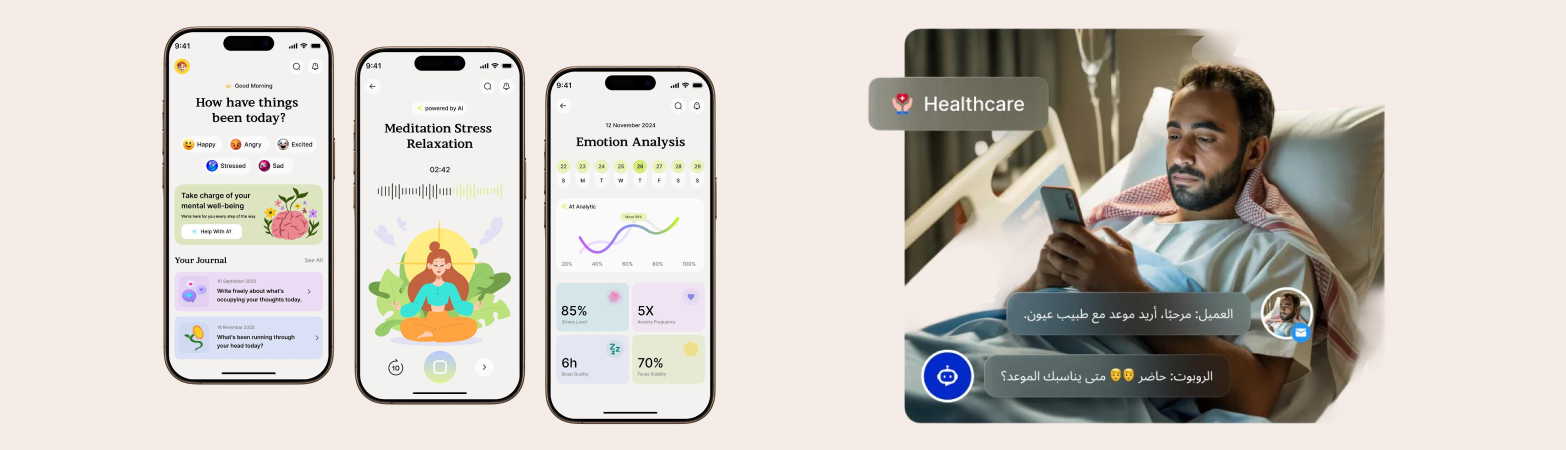
Features like mood tracking, personal wellness plans, guided meditation suggestions, and custom reminders help users feel like the app understands them. When someone sees their own progress and patterns reflected in the app, they feel more connected to it and more motivated to continue.
AI and data tools are making personalisation even smarter, and the UAE's growing investment in AI healthcare is pushing this forward quickly.
Smart AI Features That Actually Help
AI is now a core part of many mental health apps. Chatbots can offer initial emotional support, smart systems can detect mood patterns, and automated reminders can check in at the right moments. These features make support faster and more accessible.
But there is an important balance to get right. Users still want to feel heard and cared for — not like they are talking to a machine. Apps that use AI without warmth or transparency can quickly feel cold and unreliable. The best apps use technology to support people, not replace the human element.
Video Therapy From Anywhere
Many people in the UAE prefer not to visit a clinic in person for mental health support. Online therapy removes that barrier. Secure video consultations, chat support, easy appointment booking, and digital follow-ups give users the flexibility to connect with a licensed therapist from wherever they are.
When these features are built with strong privacy and security, they also help build real trust between patients and healthcare professionals.
Multiple Languages for a Diverse Population
The UAE is one of the most culturally diverse places in the world. A mental health app that only works in one language is going to miss a large part of its potential audience.
Apps offering both Arabic and English — with content that feels natural and culturally respectful in each — have a real advantage. Simple language, easy navigation, and content that reflects the values and communication styles of different communities all contribute to a more welcoming and effective experience.
Mood Tracking and Daily Wellness Tools
One of the most popular features in mental health apps is mood tracking. When users can log how they feel each day — their stress levels, sleep quality, and daily habits — they start to notice patterns they might never have spotted before.
This self-awareness is powerful. Paired with guided breathing exercises, mindfulness activities, and helpful daily reminders, mood tracking gives users practical tools to take charge of their own mental wellbeing.
Connecting With Wearables and Other Health Apps
Modern users expect everything to work together. A mental health app that connects with a smartwatch or fitness tracker can pull in data on sleep, heart rate, and physical activity — giving both users and healthcare providers a fuller picture of someone's overall health.
These integrations make the app more useful and more relevant, which helps keep people engaged over the long term.
Building Trust That Lasts
At the end of the day, trust is the most important factor in any mental health app's success. Users are sharing some of their most sensitive personal information, and they need to feel completely safe doing so.
Apps that deliver accurate information, perform reliably, protect data properly, and provide genuine professional support are the ones that build lasting relationships with their users. Trust is not built overnight — but once it is there, it keeps people coming back.
Conclusion
The demand for digital mental health solutions in the UAE continues to grow as more people seek accessible and convenient ways to support their emotional wellbeing. Successful mental health apps focus on user privacy, personalised experiences, multilingual accessibility, teletherapy support, and seamless health tracking features. Businesses and healthcare providers that invest in secure and user-friendly mental wellness platforms can better meet the changing needs of users in the region.
Companies such as smartData UAE are helping organisations develop scalable and secure healthcare applications that support modern mental wellness services in the UAE market.